E-commerce Licence in Dubai: Activities, Costs, Documents and Setup
Learn how to obtain a Dubai e-commerce licence, select activities, compare mainland and Free Zone options, prepare documents and budget for setup.
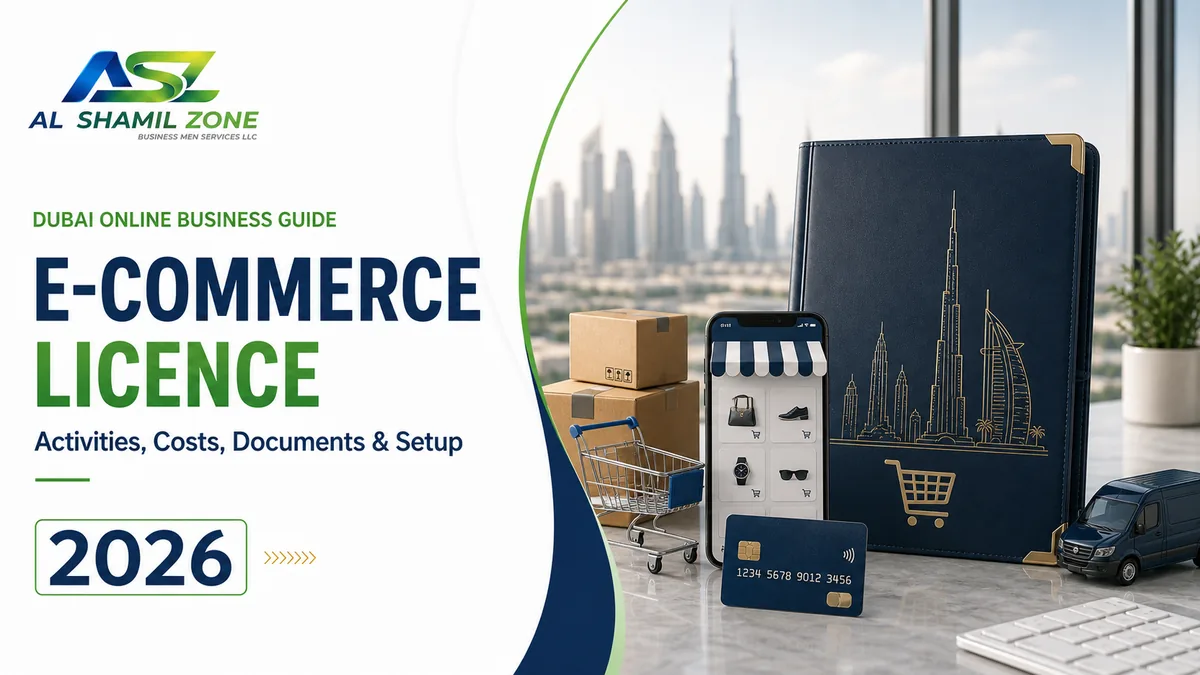
An e-commerce licence in Dubai allows a properly licensed business to sell approved products or services through websites, mobile applications, social-media channels and digital marketplaces. The online channel does not replace the underlying business activity: the licence must cover both what the company sells and how it sells it.
What is an e-commerce licence in Dubai?
Official UAE guidance states that a business selling products or services online on the mainland needs a commercial licence that includes the relevant e-commerce activity from the emirate's economic authority. In Dubai, the issuing authority is the Dubai Department of Economy and Tourism.
An e-commerce licence can support sales made through:
- an owned online store or website;
- a mobile application;
- social-media pages and messaging channels;
- third-party digital marketplaces;
- subscription or digital-service platforms; and
- business-to-business online ordering systems.
The permitted scope is determined by the activities printed on the licence. A general e-commerce description does not automatically authorise every product category.
Which activities should be added?
The correct activity combination depends on the actual business model. Examples include online retail, portal operation, marketplace activity, software or digital services, and the trading activity for the products being sold.
For example, an online cosmetics shop, an electronics store and a subscription software company do not have identical licensing or approval requirements. Regulated products such as food, cosmetics, medical products, pharmaceuticals and telecommunications equipment may need product registration or approval from another authority.
Prepare a clear list of products and services before requesting a quotation. If the catalogue is broad, compare a specific trading activity with a general trading licence.
Mainland or Free Zone e-commerce licence?
| Consideration | Dubai mainland | UAE Free Zone |
|---|---|---|
| Primary market | Suitable for direct mainland commercial activity under the approved licence | Often suited to international sales, digital businesses and operations within the chosen zone |
| Licence authority | Dubai Department of Economy and Tourism | The selected Free Zone authority |
| Mainland sales | Conducted through the mainland entity under its approved activities | May require a distributor or additional commercial and customs arrangements |
| Workspace | Premises and Ejari requirements depend on the licence and activity | Flexi-desk, office and warehouse options depend on the package |
| Inventory | Approved premises, warehousing and customs arrangements may be required | Storage and logistics depend on the zone, product and mainland delivery model |
The lower advertised package is not necessarily the lower operating cost. Compare fulfilment, customs, warehouse, payment, visa and mainland-access requirements before selecting a jurisdiction. See our detailed Mainland vs Free Zone guide.
Documents commonly required
- passport copies of shareholders and managers;
- passport photographs;
- Emirates ID and current visa details, where applicable;
- proposed trade names;
- selected business and e-commerce activities;
- initial approval documents;
- memorandum of association or incorporation documents;
- tenancy, Ejari or Free Zone workspace agreement;
- ultimate beneficial owner information; and
- external approvals or product documents where required.
A corporate shareholder normally needs additional board resolutions and legalised company documents. Requirements vary with the applicant, legal form and authority.
Step-by-step setup process
- Define the model. List the products or services, sales channels, customer locations, inventory source and delivery process.
- Select the jurisdiction. Compare mainland and Free Zone options against the real route to market.
- Confirm the activities. Include the underlying trading or service activities as well as the online channel.
- Choose a legal form. Match ownership, liability and future investment requirements.
- Reserve the trade name. Submit compliant name options to the licensing authority.
- Obtain initial and external approvals. Regulated products or digital activities may require additional clearance.
- Secure the workspace. Arrange the approved office, flexi-desk or warehouse solution.
- Submit the final application. Provide the formation documents and pay the authority's invoice.
- Complete operating registrations. Address establishment, immigration, customs, tax, banking and product-registration requirements as applicable.
Is TDRA approval required?
The UAE Government's e-commerce guidance states that e-commerce licences require the relevant Telecommunications and Digital Government Regulatory Authority approval process for practising digital activity. The exact application route can depend on the licensing authority and activity, so confirm whether it is incorporated into the licence workflow or requires a separate submission.
How much does an e-commerce licence cost?
There is no single reliable price for every Dubai e-commerce business. The final cost can include:
- trade-name reservation and initial approval;
- licence issuance and selected activities;
- legal-form and incorporation charges;
- office, flexi-desk or warehouse costs;
- establishment card and immigration file;
- investor, partner and employee visas;
- external approvals and product registrations;
- customs and importer registration;
- website, payment gateway and marketplace onboarding; and
- annual renewal and compliance services.
Request an itemised quotation showing what is included, what is optional and which expenses recur each year. Do not compare packages using only the headline licence fee.
Do you need an office or warehouse?
A service-based online company may qualify for a smaller workspace solution, while a business holding stock can need suitable storage or a third-party fulfilment arrangement. Product type, visa allocation and the issuing authority's rules influence the requirement.
Do not store regulated or commercial inventory at an unsuitable location. Confirm warehousing, civil-defence, municipality, customs and product-specific conditions before signing a lease.
What must the online store display?
Federal Decree-Law No. 14 of 2023 regulates trade through modern technology, including websites, apps, social media and digital marketplaces. Official guidance highlights accurate product information, permitted goods and services, customer-data protection, secure infrastructure and clear digital invoices.
An online business should clearly present its legal identity, contact information, prices, delivery terms, cancellation and return conditions, privacy information and other required customer disclosures. Read our separate UAE e-commerce compliance guide for the operational checklist.
Payments, banking and tax
Payment providers and banks conduct their own onboarding and risk reviews. They may request the licence, incorporation documents, shareholder details, website, policies, supplier contracts, expected transaction volumes and evidence of the business model. A licence does not guarantee approval.
The company must also assess UAE corporate tax, VAT registration, invoicing, bookkeeping and record-retention obligations. Cross-border digital services and imported goods can introduce additional tax and customs questions. Obtain advice based on the actual transaction flow.
Common e-commerce setup mistakes
- licensing the online channel but omitting the underlying product activity;
- selecting a Free Zone package without planning mainland fulfilment;
- ordering regulated products before confirming approvals;
- launching a website without clear customer and privacy policies;
- assuming that marketplace acceptance replaces a business licence;
- ignoring customs, warehousing and returns costs;
- using personal banking for company sales; and
- comparing only first-year promotional prices.
Official references
- UAE Government: E-commerce licences and responsibilities
- UAE Government: Steps to start a mainland business
- UAE Government: Verify licences, names and activities
- Federal Tax Authority: VAT legislation and guidance
Plan your Dubai online business
Al Shamil Zone can compare licence options, confirm suitable activities, prepare the incorporation documents and coordinate the licensing, visa and related registration steps for your e-commerce business.
Discuss your e-commerce setup: call +971 4 408 1900, message +971 50 777 5554 on WhatsApp, or request a consultation.
This article provides general information and not legal, tax, regulatory or professional advice. Activities, approvals, legal forms, costs and operating requirements depend on the current rules and individual application.
Ready to get started? Contact Al Shamil Zone by phone at 800 2794, via WhatsApp at +971 54 586 6222, or email info@shamilservices.ae.