Dubai Mainland Company Formation: Complete 2026 Guide
A practical Dubai Mainland formation guide covering activities, ownership, legal forms, trade names, approvals, Ejari, documents, visas and post-licence steps.
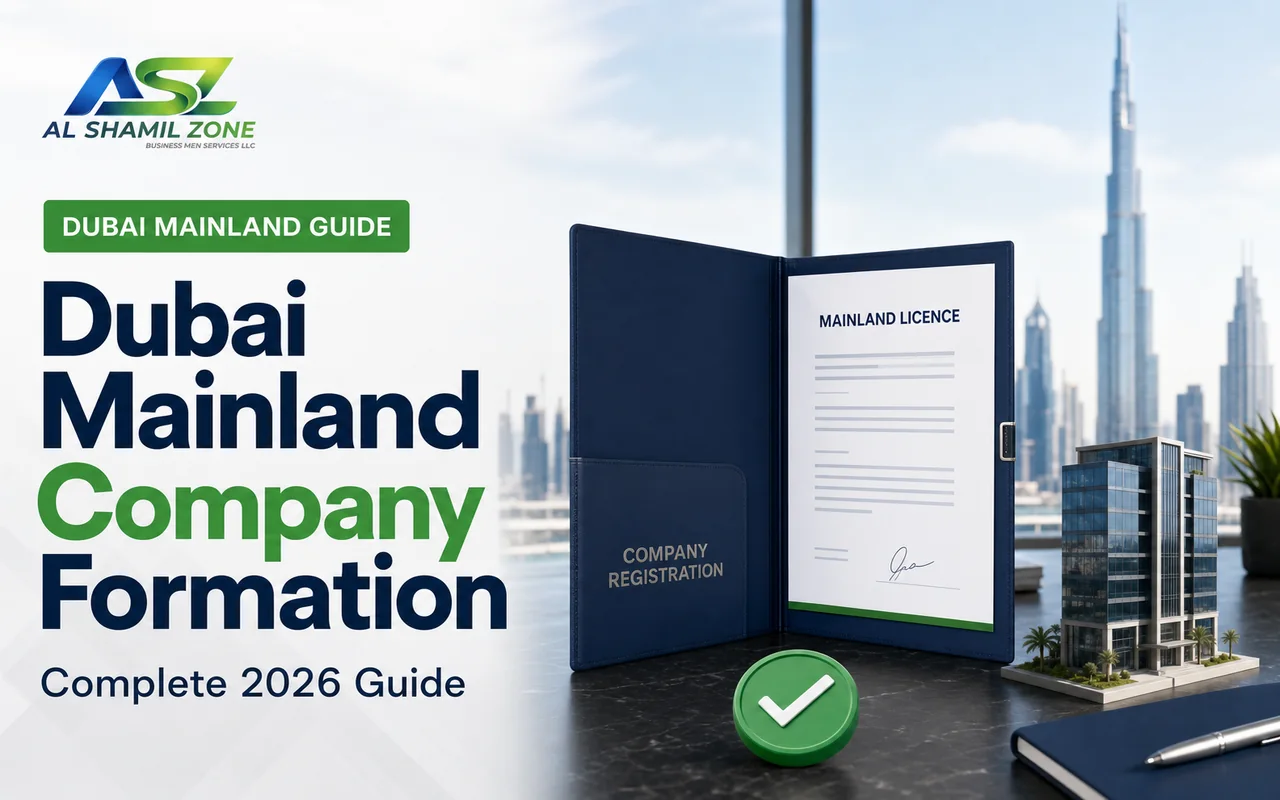
Dubai Mainland company formation allows an entrepreneur to establish a business licensed by Dubai's competent economic authority and operate in accordance with the approved activities and UAE laws. It is often considered by businesses that need a physical Dubai presence, direct access to the local market, a shop or office, government customers, or activities regulated outside a Free Zone.
The right setup depends on the activity, legal form, ownership, premises, approvals and immigration needs. A Mainland licence is not one standard product.
What does Dubai Mainland mean?
Mainland businesses are licensed through the local economic authority rather than incorporated under a Free Zone authority. They can conduct their approved activities from compliant premises and serve customers according to the scope of the licence and any sector rules.
Mainland can be suitable when the business requires:
- direct commercial activity across the UAE market;
- a retail shop, restaurant, clinic or customer-facing premises;
- government and large corporate contracting opportunities;
- employee capacity connected to physical premises;
- industrial, construction or other locally regulated operations; or
- a structure not available or suitable in the shortlisted Free Zone.
Can a foreign investor own 100%?
Many Mainland activities permit full foreign ownership, but ownership should be checked against the exact activity and legal form. Activities with strategic impact, professional arrangements, branches and regulated sectors can have additional conditions.
Do not rely on a general statement that every Mainland company has identical ownership rules. Confirm the activity code before signing a lease or shareholder agreement.
Step 1: define the business activities
The activity determines the licence type, legal form, name rules, approvals, premises and sometimes the ownership conditions. Invest in Dubai provides an activity-search service, while the UAE Government notes that the country offers more than 2,000 business activities.
Describe the actual revenue model:
- What products or services will be sold?
- Will goods be imported or stored?
- Will customers visit the premises?
- Will advice be provided in a regulated profession?
- Will the company recruit or sponsor employees?
- Will online sales, marketplace activity or payment processing be involved?
Step 2: choose the legal form
The legal form must match the activity and ownership plan. Common options can include a limited liability company, sole establishment, civil company, branch or other form permitted for the activity.
Consider liability, number and type of shareholders, governance, profit distribution, capital, succession and future investment. Corporate shareholders may need board resolutions, constitutional documents, beneficial-owner information, attestations and translations.
Step 3: reserve the trade name
The name must comply with naming rules, match the legal form and not conflict with an existing registration. A trade name is different from trademark protection. If brand ownership matters, conduct an appropriate trademark search and consider a separate application.
Step 4: obtain initial approval
Initial approval confirms that the authority has no objection to progressing with the formation. It does not authorise the company to trade. Additional immigration or regulator checks can apply depending on the applicant and activity.
Step 5: prepare the constitutional documents
An LLC and certain other structures require a Memorandum of Association or related agreement. The document should correctly reflect shareholders, management, capital, powers, transfers and profit arrangements.
Do not treat the MOA as a formality when there are multiple partners. A separate shareholders' agreement may be appropriate for reserved decisions, funding, exits, deadlock and non-compete arrangements.
Step 6: secure compliant premises
The UAE Government states that businesses must have a physical address that complies with economic-department and municipal requirements. In Dubai, the tenancy is registered through Ejari.
Premises requirements depend on the activity. Before signing, confirm:
- the activity is permitted at the location;
- the unit type and size meet licensing conditions;
- signage, fit-out and civil-defence approvals;
- visa allocation expectations;
- municipal, health or other inspection requirements; and
- renewal, deposit and utility obligations.
Step 7: obtain external approvals
Some activities require approvals from authorities responsible for health, education, finance, transport, recruitment, food, telecommunications, legal services, media or other regulated sectors.
An approval may require qualifications, experience, a manager, facility drawings, equipment, insurance or inspections. Build it into the project plan before committing to premises.
Step 8: issue and verify the licence
After the application, documents, tenancy and approvals are complete, the authority issues a payment voucher and then the licence upon payment. Verify the legal name, activities, managers, partners, address and expiry date immediately.
Documents commonly required
The exact list varies, but formation planning commonly includes:
- passport copies for shareholders and managers;
- UAE visa, entry record and Emirates ID where applicable;
- trade-name and initial-approval records;
- MOA or other constitutional document;
- Ejari or approved tenancy evidence;
- external approvals for regulated activities;
- NOC where required by the applicant's status or authority;
- corporate shareholder documents, resolutions and UBO records; and
- professional qualifications or business plan where required.
What happens after the licence?
The licence is a major milestone, but the company may still need:
- establishment and immigration files;
- investor, partner or employee visa processing;
- medical fitness, Emirates ID and health insurance;
- labour and payroll registrations where applicable;
- corporate bank account preparation;
- Corporate Tax and VAT assessment;
- accounting records and invoice controls;
- customs registration for import-export operations; and
- sector permits and operational inspections.
How long does formation take?
A straightforward application can progress quickly when the activity, owners, name, documents and premises are ready. Regulated activities, corporate shareholders, foreign documents, external approvals and fit-out can extend the timeline.
A responsible plan separates licence issuance from the date the business will actually be ready to trade.
How much does it cost?
Mainland cost depends on the activity, legal form, name, premises, market-related charges, approvals, visas and professional services. Request an itemised quotation rather than relying on one advertised number.
Read our Dubai business setup cost guide for a complete budgeting framework.
Mainland or Free Zone?
| Question | Mainland may suit | Free Zone may suit |
|---|---|---|
| Customer market | Direct UAE market and local premises | International, specialist or Free Zone ecosystem |
| Facility | Retail, office, clinic, workshop or local warehouse | Flexi desk, Free Zone office or specialist facility |
| Authority | Dubai economic and relevant local regulators | Selected Free Zone authority and relevant regulators |
| Package | Built from activity, legal form and premises | Often bundled with workspace and visa eligibility |
The decision should be based on operations, not only the first-year licence price.
Common formation mistakes
- Selecting an activity that does not cover the actual revenue.
- Assuming full foreign ownership without checking the specific activity.
- Signing an unsuitable tenancy before authority confirmation.
- Ignoring external approvals and qualification requirements.
- Using an MOA that does not reflect the partners' commercial agreement.
- Budgeting for the licence but not visas, fit-out, tax and accounting.
- Assuming a corporate bank account is guaranteed.
- Starting operations before the licence and permits are complete.
Official references
- UAE Government: Steps to start a business on the Mainland
- Invest in Dubai: Search business activities
- UAE Government: Full foreign ownership of commercial companies
Explore our Mainland company formation services, compare UAE jurisdictions, or speak with Al Shamil Zone about your activity, ownership and premises.
This article provides general information and is not legal or investment advice. Confirm the current requirements with the competent authority.
Ready to get started? Contact Al Shamil Zone by phone at 800 ASZG (2794), via WhatsApp at +971 54 586 6222, or email info@shamilservices.ae.