UAE E-Invoicing: What Businesses Need to Prepare For
Understand the UAE eInvoicing rollout, current deadlines, Accredited Service Providers and the systems, data and processes businesses should prepare.
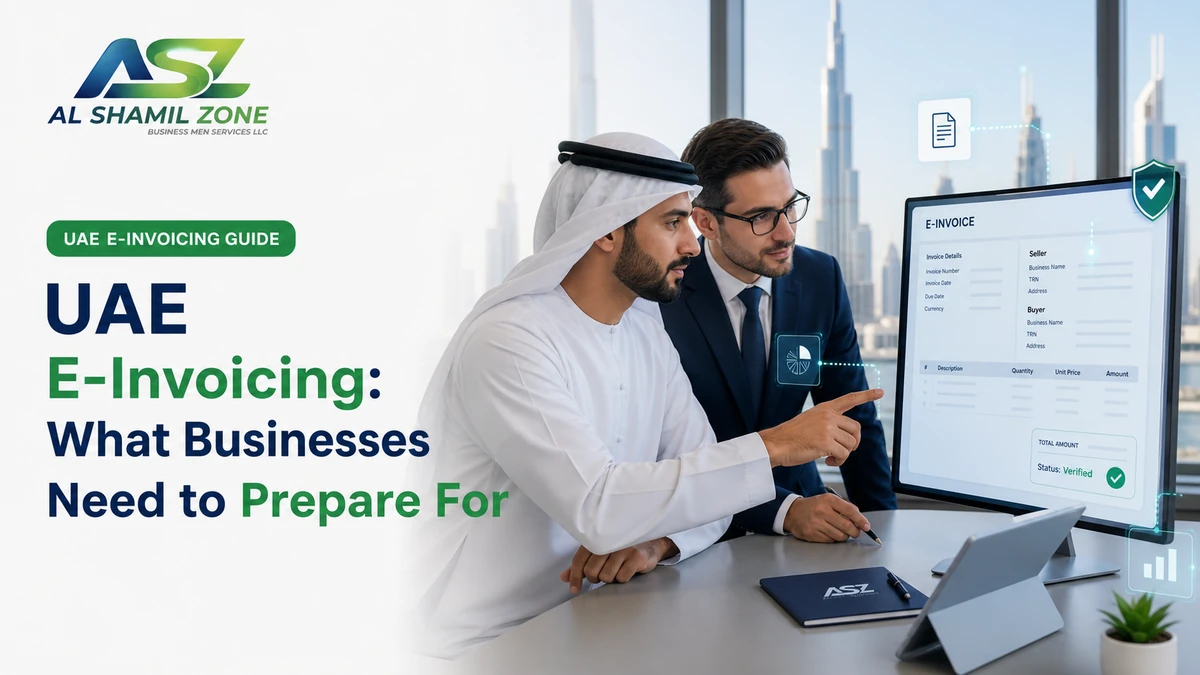
The UAE Electronic Invoicing System changes invoicing from exchanging documents into exchanging structured data. It is not simply a requirement to email customers a PDF. Businesses in scope will create and exchange electronic invoice data through an Accredited Service Provider, with the relevant data reported electronically to the Federal Tax Authority.
The pilot and voluntary phase began on 1 July 2026, and mandatory implementation follows in stages. Businesses should use the preparation period to assess their transactions, accounting systems, master data, internal controls and service-provider options.
What is an eInvoice in the UAE?
An eInvoice is invoice data produced in a prescribed structured format so that it can be exchanged and processed electronically. According to the Ministry of Finance, PDFs, Word files, images, scanned invoices and invoices sent only by email are unstructured formats and do not qualify as eInvoices.
The UAE framework uses the Peppol model and UAE data requirements. In practical terms, the supplier's accounting or billing system sends structured invoice data through its Accredited Service Provider. The data is routed securely to the buyer and the required information is reported to the FTA.
The Ministry of Finance maintains the official UAE eInvoicing portal, including legislation, guidelines, mandatory fields and service-provider information.
Which transactions are in scope?
The framework generally applies to persons conducting business in the UAE in relation to business-to-business (B2B) and business-to-government (B2G) transactions, subject to exclusions and detailed rules in the legislation.
Business-to-consumer (B2C) transactions are not currently subject to mandatory implementation until a later date determined by ministerial decision. A business serving both companies and consumers should therefore map the transaction types separately rather than assuming its entire invoicing process receives the same treatment.
Businesses should also examine special transactions, credit notes, self-billing, exports, imports, group arrangements and cross-border scenarios against the latest official guidance.
Current UAE eInvoicing timeline
| Business category | Appoint an Accredited Service Provider | Mandatory implementation |
|---|---|---|
| Annual revenue of AED 50 million or more | By 30 October 2026 | By 1 January 2027 |
| Annual revenue below AED 50 million | By 31 March 2027 | By 1 July 2027 |
| Government entity | By 31 March 2027 | By 1 October 2027 |
The pilot programme commenced on 1 July 2026. Businesses may also implement voluntarily from that date if they comply with the applicable technical requirements.
The original appointment deadline for businesses with annual revenue of at least AED 50 million was extended to 30 October 2026 by a 2026 amendment. Their mandatory implementation date remains 1 January 2027. Because the programme is evolving, always confirm deadlines on the official Ministry portal before making a final implementation decision.
What is an Accredited Service Provider?
An Accredited Service Provider, or ASP, connects a business to the UAE eInvoicing network. The provider validates, exchanges and reports structured invoice data in accordance with the required framework.
A business should not choose a provider based only on the headline subscription price. Consider:
- status on the current Ministry list of approved or accredited providers;
- compatibility with the accounting, ERP, billing and point-of-sale systems used by the business;
- implementation and integration support;
- data security, hosting, availability and disaster recovery;
- ability to manage transaction volume, currencies and business scenarios;
- validation rules, rejection handling and monitoring dashboards;
- customer support and service-level commitments;
- setup, transaction, support and change-request charges; and
- data portability and exit arrangements.
The Ministry publishes a periodically updated service-provider list. Businesses should verify current status before signing an agreement.
How the exchange works
- The supplier creates invoice data in its billing or accounting system.
- The supplier's ASP converts or receives that data in the prescribed format and performs required validations.
- The structured invoice is securely routed to the buyer's ASP.
- The buyer receives invoice data that can be processed in its own system.
- The relevant invoice data is reported electronically to the FTA through the framework.
The exact operational flow depends on the transaction and technical setup. The key change is that systems exchange structured data; the visual invoice humans read is no longer the only record moving between parties.
Why a PDF invoice is not enough
A PDF may look professional and include every familiar VAT field, but most PDF content cannot be processed automatically without extraction or manual entry. A structured eInvoice represents fields such as supplier, buyer, invoice number, date, tax category, taxable value and VAT amount in a machine-readable form.
A business may continue to generate a human-readable invoice view for customers or internal use, but that does not replace the structured exchange where the eInvoicing rules apply.
Data businesses should clean now
Technical integration cannot correct weak source data. Preparation should include reviewing:
- legal company name, address, trade licence and tax registration details;
- customer and supplier legal names, addresses and TRNs where applicable;
- invoice numbering and document-type controls;
- product and service descriptions;
- VAT rates, zero-rating and exemption classifications;
- units of measure, quantities, discounts and charges;
- currency and exchange-rate handling;
- payment terms and bank details;
- credit-note links to original invoices; and
- branch, establishment and group-company identifiers.
Duplicate customers, incomplete TRNs and inconsistent tax codes can create validation failures and reconciliation problems after implementation.
Systems and processes to assess
eInvoicing is not only an accounting department project. It can affect sales, procurement, operations, IT, tax, finance and customer service.
| Area | Readiness question |
|---|---|
| Billing | Where are invoices created, approved, corrected and cancelled? |
| Accounting or ERP | Can the system provide every required field and integrate with an ASP? |
| Customer data | Are legal names, addresses, tax details and transaction types complete? |
| Tax | Are VAT codes and invoice treatments consistently mapped? |
| Controls | Who handles validation errors, rejected invoices, corrections and outages? |
| Records | How will invoice data, acknowledgements and audit evidence be retained? |
A practical readiness plan
- Confirm scope and deadline. Identify the entities, revenue band and transaction types affected.
- Build a project team. Assign accountable representatives from finance, tax, IT, sales and procurement.
- Map invoice flows. Document every system and manual step used to issue and receive invoices and credit notes.
- Assess data gaps. Compare current invoice data with UAE mandatory-field requirements.
- Evaluate system capability. Confirm whether existing software will integrate directly, through middleware or through an ASP portal.
- Select an ASP. Compare approved options using technical, commercial and service criteria.
- Clean master data. Correct customer, supplier, item and tax information before migration.
- Configure and test. Test standard invoices, tax scenarios, credit notes, rejections and exception handling.
- Train users. Ensure relevant teams understand the new workflow and responsibilities.
- Monitor after launch. Track failed documents, response times, reconciliations and control exceptions.
Common mistakes to avoid
- assuming existing PDF invoices already satisfy eInvoicing;
- waiting until the mandatory date to review systems and data;
- treating implementation as an IT-only project;
- selecting an ASP without testing integration and exception handling;
- ignoring credit notes, exports and less common transaction scenarios;
- failing to separate B2B, B2G and B2C transaction flows;
- using incomplete customer tax data;
- overlooking staff training and business-continuity procedures; and
- relying on an outdated implementation timetable.
Start preparing for UAE eInvoicing
Al Shamil Zone Business Men Services can help businesses review invoicing workflows, accounting records, tax data and compliance responsibilities as part of their eInvoicing readiness planning. Technical integration and ASP contracting should be completed with suitably qualified providers.
Need help reviewing your current invoicing process? Call +971 4 408 1900, contact us on WhatsApp at +971 50 777 5554, or email info@shamilservices.ae.
This article provides general information based on official material available at the publication date. UAE eInvoicing requirements may be amended or clarified. Confirm the latest position through the Ministry of Finance and obtain advice appropriate to your systems and transactions.
Ready to get started? Contact Al Shamil Zone by phone at 800 ASZG (2794), via WhatsApp at +971 54 586 6222, or email info@shamilservices.ae.