How to Open a Business Bank Account in the UAE
Learn how UAE corporate bank account opening works, which documents banks commonly request and how to prepare a clear, credible application.
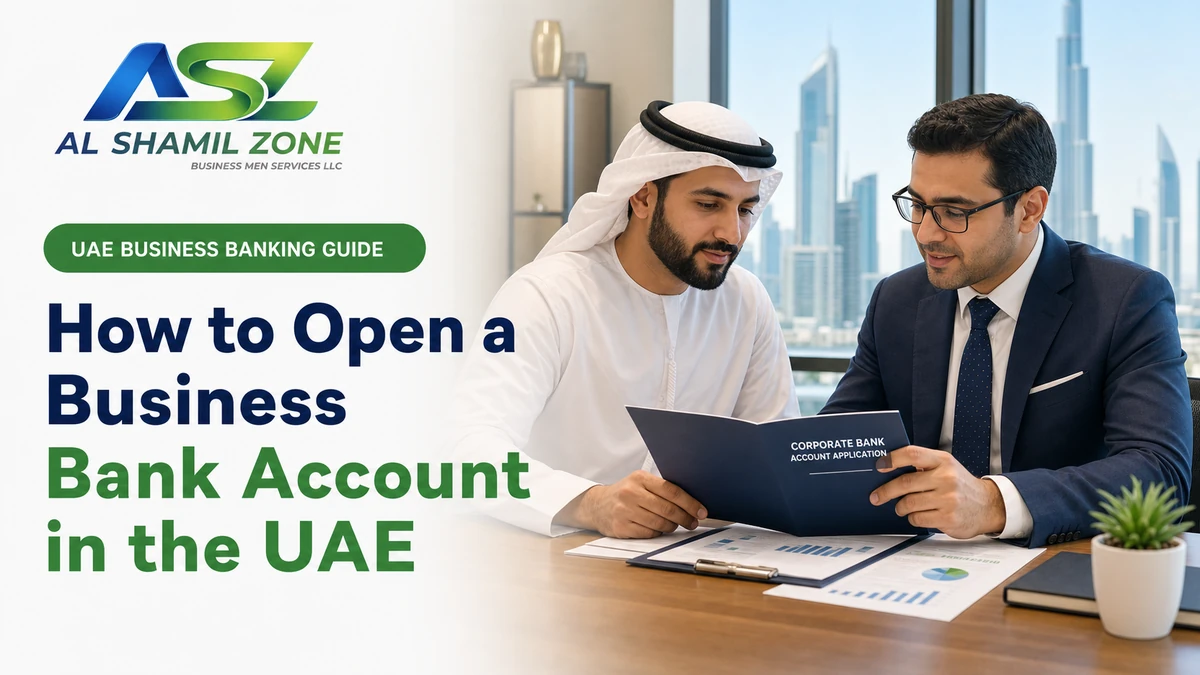
Opening a UAE business bank account is an important step after company formation, but receiving a trade licence does not automatically guarantee that a bank will approve an application. Each bank applies its own onboarding policy, product criteria and risk assessment.
A strong application helps the bank understand who owns the company, what it does, where its money comes from and how the account is expected to be used. This guide explains the usual process, the documents commonly requested and the practical issues founders should address before applying.
Can every UAE company open a business bank account?
A properly licensed Mainland, Free Zone or Offshore company may approach banks that serve its type of business. However, account opening remains subject to the selected bank's customer due diligence, internal risk appetite and product requirements.
Banks are required to identify and verify the customer and its beneficial owners, understand the ownership and control structure, establish the purpose of the relationship and assess expected account activity. The Central Bank of the UAE explains these core elements in its official CDD and KYC guidance.
This means two companies holding similar licences may receive different outcomes because their ownership, activities, markets, transactions and supporting evidence differ.
What does a bank examine?
The review is broader than checking incorporation documents. A bank normally seeks a coherent picture of the company and the people behind it.
- Company identity: legal name, licence, legal form, registered address and incorporation status.
- Ownership and control: shareholders, ultimate beneficial owners, directors, managers and authorised signatories.
- Business model: products or services, target customers, suppliers, operating locations and sales channels.
- Source of funds and wealth: how startup capital was accumulated and where incoming money is expected to originate.
- Expected activity: anticipated monthly turnover, transaction sizes, currencies, countries and payment methods.
- Commercial substance: evidence that the company is genuinely preparing to trade or is already operating.
- Risk factors: regulated activities, complex ownership, higher-risk jurisdictions, politically exposed persons or unusual transaction patterns.
Documents commonly required
The exact checklist varies between banks, company types and applicant profiles. A typical application may require the following:
Company documents
- valid trade licence;
- certificate of incorporation or registration;
- memorandum and articles of association;
- share certificate or shareholder register, where applicable;
- certificate of incumbency or equivalent corporate extract, where applicable;
- registered office, tenancy contract or workspace evidence;
- board resolution authorising the account and signatories; and
- ultimate beneficial owner declaration and ownership chart.
Personal documents
- valid passports for shareholders, beneficial owners, directors and signatories;
- UAE residence visas and Emirates IDs where applicable;
- proof of residential address;
- personal or existing company bank statements when requested; and
- CV or professional background information for key owners or managers.
Commercial evidence
- business plan or company profile;
- signed customer and supplier contracts;
- invoices, quotations or purchase orders;
- website, professional email address and marketing material;
- financial projections or management accounts;
- audited financial statements for an established business;
- VAT and corporate tax registration details where relevant; and
- evidence supporting the source of initial funding.
The bank may request additional information. Documents issued outside the UAE may also require notarisation, legalisation, attestation or certified translation depending on the bank and issuing country.
How the account-opening process usually works
| Stage | What happens | How to prepare |
|---|---|---|
| 1. Bank selection | The company identifies banks and account products suitable for its activity, ownership and transaction needs. | Compare eligibility, fees, balances, currencies, digital banking and international-payment requirements. |
| 2. Initial application | Corporate and personal information is submitted with the available supporting documents. | Ensure names, addresses, ownership percentages and business descriptions are consistent. |
| 3. KYC interview | The bank discusses the business model, source of funds, customers, suppliers and expected activity. | The signatory should understand the company and answer clearly rather than relying entirely on an adviser. |
| 4. Compliance review | The bank verifies information, screens relevant parties and may request clarification or additional evidence. | Respond promptly with complete, genuine and organised documents. |
| 5. Decision and activation | If approved, the bank completes account opening and activates the selected services. | Review fees, minimum-balance conditions, transaction limits and user access before operating. |
How long does opening an account take?
There is no universal processing time. A straightforward application with a simple ownership structure and complete evidence may progress faster, while a complex or higher-risk profile can require extended review.
Delays often arise when the bank must clarify overseas ownership, verify source of funds, understand activity across several countries, review a regulated business or reconcile inconsistent information. A realistic adviser should never promise an exact approval date.
Does the owner need UAE residency?
Requirements differ by bank and product. Some banks offer options for companies with non-resident shareholders, while others expect one or more UAE-resident signatories or managers. Residency can make identity verification and local substance easier to demonstrate, but it does not by itself guarantee approval.
Confirm the selected bank's eligibility rules before arranging residency solely for account-opening purposes.
Do Free Zone companies face different requirements?
Free Zone companies can apply for UAE business bank accounts, but the bank will consider the specific licence, permitted activities, workspace, operating model and relationship between the company and the UAE.
A flexi-desk can satisfy the licensing authority for certain packages, yet a bank may still ask how the company will operate, where records are kept, who manages it and why a UAE account is commercially necessary. Strong contracts, a credible website, professional communication and a clear transaction profile can help explain the business.
Why applications are delayed or declined
Common problems include:
- an unclear or very broad business description;
- activity on the application that does not match the trade licence;
- missing ownership information or a difficult-to-verify corporate chain;
- unexplained source of funds or source of wealth;
- no evidence of customers, suppliers or planned operations;
- inconsistent turnover estimates across forms, interviews and business plans;
- countries, products or counterparties outside the bank's risk appetite;
- expired, poor-quality or contradictory documents;
- using a personal account for company transactions; or
- failing to respond fully to compliance questions.
A declined application does not necessarily mean every UAE bank will reach the same conclusion. It does mean the company should understand the reason, correct any weakness and approach only banks that genuinely fit its profile.
How to strengthen an application
- Choose a suitable licensed activity. The licence should accurately describe the business that will use the account.
- Prepare a concise business profile. Explain the offering, management experience, markets, customers, suppliers and revenue model.
- Document source of funds. Connect initial deposits to bank statements, salary, investments, sale proceeds or other legitimate evidence.
- Support projected transactions. Use signed contracts, purchase orders, invoices or credible forecasts.
- Keep information consistent. Names, ownership, turnover and transaction countries should agree across every document.
- Show appropriate substance. Maintain a working website, domain email, contact details, workspace and operational records suitable for the business.
- Prepare the signatory. The person attending the interview must understand how the company will operate.
Questions to ask before choosing a bank
- Does the bank onboard this legal form, licence authority and business activity?
- What opening deposit or ongoing minimum balance applies?
- Which monthly fees and transaction charges apply?
- Are the required currencies and international corridors supported?
- What digital banking, payment approval and user-access controls are available?
- Are cheque books, cards, merchant services or trade-finance facilities needed?
- What documents must be submitted before the compliance review begins?
Opening the account is not the end of KYC
Customer due diligence continues throughout the banking relationship. Banks may periodically request an updated licence, ownership details, identification documents, financial statements or explanations of transactions. Material changes to shareholders, signatories, activities, address or expected turnover should be reported when required.
Transactions should remain consistent with the declared business model. Proper invoices, contracts, accounting records and tax documentation make later reviews easier.
Prepare your UAE business banking application
Al Shamil Zone Business Men Services can help organise the corporate documents, ownership information, company profile and commercial evidence needed for a structured application. We can also help identify account options aligned with the company's activity and operating requirements.
Ready to discuss your company? Call +971 4 408 1900, message us on WhatsApp at +971 50 777 5554, or email info@shamilservices.ae.
This article provides general information only. Account availability, documentation, timelines and approval are determined by the selected bank following its own compliance review. Al Shamil Zone does not guarantee bank-account approval.
Ready to get started? Contact Al Shamil Zone by phone at 800 ASZG (2794), via WhatsApp at +971 54 586 6222, or email info@shamilservices.ae.